Complete Guide to HVAC Troubleshooting (Every Common Problem)
HVAC troubleshooting starts with three quick checks before calling anyone. The 12 most common AC, furnace, and duct problems with $5-40 DIY fixes vs $100-250 tech-call costs.

Quick answer: HVAC troubleshooting starts with three checks before you call anyone: replace or check the filter (the cause of about 70% of “broken” AC calls), confirm the thermostat is on COOL and set below room temp with fresh batteries, and check the breaker for the HVAC circuit plus the outdoor disconnect box. Most “AC not working” calls are one of these three. If everything passes, the most common real problems are a clogged condensate drain (water on the floor), low refrigerant (cooling weakly), or a failed capacitor in the outdoor unit (humming but no fan). Anything involving refrigerant, the compressor, gas lines, or wiring inside the unit means call a licensed HVAC tech, federal law (EPA Section 608) makes refrigerant work technician-only anyway.
A typical service call runs $100 to $250 just to show up, and most show-up fees turn into “your filter was clogged, here’s the bill.” Three checks at the start of this guide save that visit nine times out of ten. The other problems below need a real diagnosis, and a few need a pro, but you’ll know which is which by the end.
This is the diagnostic flowchart I use on my own house. Work through the sections in order if you don’t know what’s wrong, or jump to the symptom that matches yours.
How Your HVAC System Actually Works (60-Second Version)
A central HVAC system has four parts that matter for troubleshooting:
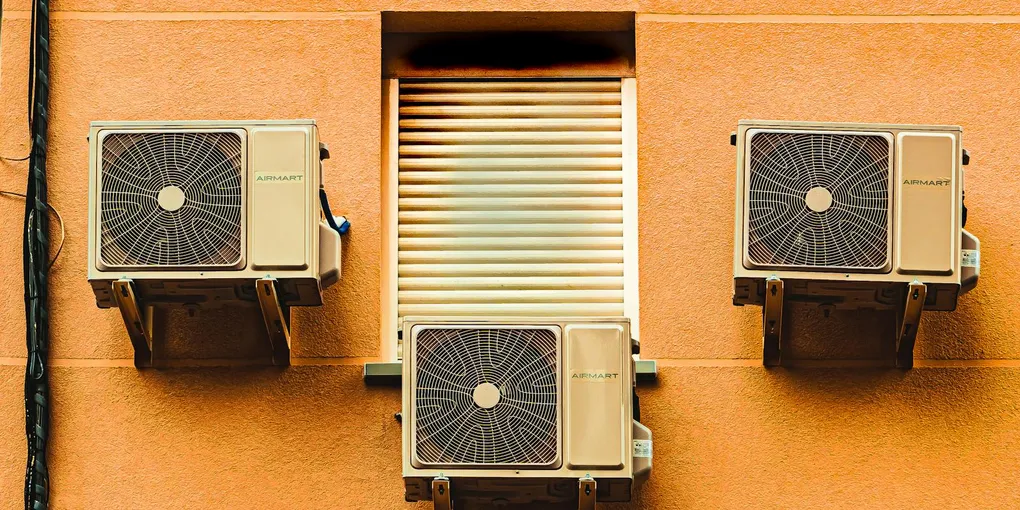
- The outdoor unit (condenser). The big metal box outside with a fan on top. Contains the compressor and condenser coils. Job: dump heat from inside the house to the outside air.
- The indoor unit (air handler or furnace). In the basement, attic, or a closet. Contains the blower, the evaporator coil, and on combo systems the furnace. Job: pull warm air from the house, run it across the cold evaporator coil, push cool air back through the ducts.
- The ducts and vents. The pipes that move air. Job: deliver conditioned air to every room and return it for re-conditioning.
- The thermostat. The brain. Tells the system when to run and how hard.
Cooling works by moving heat, not creating cold. Refrigerant absorbs heat indoors, carries it outside, releases it into the outdoor air, and comes back to do it again. Anything that interrupts that loop (dirty coil, low refrigerant, blocked airflow, dead compressor) shows up as “AC not cooling.”
Heating, on a gas furnace, works by burning gas in a combustion chamber, passing the hot exhaust through a heat exchanger, and blowing house air across the outside of that exchanger. On a heat pump, it’s the cooling cycle in reverse: refrigerant pulls heat from outside air and dumps it inside.
That’s the whole system. Everything below is what goes wrong with one of these four parts.
Three Checks Before You Call Anyone
Most HVAC service calls solve at one of these three. Do them in order before picking up the phone.
Check 1: The Filter
A clogged filter blocks airflow, makes the system work harder, freezes the evaporator coil, trips the float switch, and eventually burns out the blower motor. It’s the cause of about 70% of “AC broken” calls. Pull the filter and hold it up to a light. If you can’t see light through it, it’s done.
Standard filter sizes (16x20, 20x25, etc.) are at every home center for $5 to $15. Change every 1 to 3 months. Energy Star recommends checking monthly during heavy-use seasons and replacing at least every 3 months (Energy Star heating and cooling guidance). Households with pets or allergies, change monthly.
A note on MERV ratings: higher isn’t always better. MERV 8-11 filters catch most household particles without restricting airflow. MERV 13+ is rated for medical and commercial use, and on a residential system they can starve airflow and reduce efficiency. Stick with MERV 8-11 unless your HVAC tech has specifically recommended higher.
Check 2: The Thermostat
Sounds dumb, fixes it twice a season. Verify:
- Mode is set to COOL (not HEAT or OFF or FAN)
- Set temperature is at least 3-5 degrees below current room temp (otherwise the system has no reason to run)
- Batteries are fresh on battery-powered thermostats (Honeywell, basic Nest models). A dying battery causes random shutdowns that look like AC failure.
- Display is on. A blank thermostat = dead batteries or a tripped 24V transformer.
For smart thermostats (Nest, Ecobee, Honeywell T-series), open the app and verify it sees the system as “cooling” when the mode is on. A network glitch between the thermostat and your phone doesn’t matter, but a thermostat that thinks it’s offline can stop calling for cooling.
Check 3: The Breakers
Central AC has two breakers: one in the main electrical panel (usually a 30-amp double-pole), and one in a small disconnect box mounted on the wall right next to the outdoor unit. Both have to be ON.
If the breaker in the main panel tripped, reset it once. If it trips again immediately or within a minute of the system starting, stop and call a tech, that’s a short or a failing capacitor pulling too much current, and it’ll keep tripping. Resetting a tripped breaker repeatedly is how electrical fires start.
If the outdoor disconnect was off (someone pulled it during a recent yard project), flip it back on and wait 5 minutes before testing.
Pass all three? Move to the symptom that matches yours below.
AC Not Cooling
The most common HVAC complaint. The cause depends on the specifics.
Not blowing any cold air at all (just room-temp air). The system is running but cooling isn’t happening. Causes range from a dirty filter (already checked) to a refrigerant leak to a failed compressor. The full diagnostic walk-through with the right test order is in our why is my AC not blowing cold air guide.
Blowing cool but not cold (incremental loss of cooling power). Usually a dirty outdoor condenser coil, low refrigerant, or restricted airflow somewhere. Clean the outdoor coil first, that often restores 10 to 15% of cooling capacity overnight. If cleaning doesn’t bring it back, you probably have a slow refrigerant leak. That’s a tech call.
Some rooms cool, others hot. Almost always a ductwork issue (disconnected duct, blocked return, closed damper) rather than the AC itself. Walk to each register and feel the airflow. If one room’s vents are warm or weak while others are cold and strong, the duct serving that room has a problem.
Outdoor unit not running at all (no fan, no hum). Check the disconnect box switch again. Then check the contactor inside the disconnect (a $20 part that fails commonly after 7 to 10 years). The contactor diagnostic and replacement is a pro-level task because it involves 240V wiring.
AC Won’t Turn On
System completely dead, not even a click from the thermostat. The diagnostic flow (thermostat, transformer, condensate float switch, breaker) is in our why is my AC not turning on guide.
The most common cause on systems older than 5 years: a tripped float switch (covered below), which kills the whole system instantly to prevent water damage. Free fix.
Second most common on systems older than 10 years: a dead 24V transformer in the air handler. $20 part, but replacing it involves opening the air handler. Comfortable with that level of work or not, that’s the call.
AC Leaking Water (Inside the House)
Water on the floor near the air handler or dripping from a ceiling vent means the condensate management system is backing up.
The most common cause is a clogged condensate drain line, slime and algae build up over time, the line clogs, water can’t escape, the drain pan overflows. Sixty seconds with a wet/dry vac at the drain’s exit point usually clears it. Full procedure in our AC condensate drain line cleaning guide.
The second cause: a tripped float switch. The switch sits in the drain pan and kills the system when it senses water rising. If the system won’t turn on and there’s no obvious electrical reason, check whether the float switch tripped. Our AC float switch keeps tripping guide covers diagnosis and the underlying-cause fixes.
AC Maintenance You Can Do Yourself
Three jobs that prevent most service calls when done annually:
- Clean the outdoor condenser coils. Spring task. Dust, cottonwood seeds, lawn-mower clippings clog the fins and choke airflow. Step-by-step in how to clean AC condenser coils.
- Flush the condensate drain. Once a month during cooling season, pour a cup of distilled white vinegar into the drain access port. Kills algae before it forms a clog. Saves the wet/dry vac trip.
- Replace the filter on schedule. Every 1 to 3 months. Cheap insurance.
That’s it for owner-doable maintenance on a central system. Coil cleaning on the indoor evaporator, refrigerant level checks, electrical inspections, those are tech tasks.
Strange Noises From the HVAC
Banging or clanking from the outdoor unit. The fan is hitting something, or a piece of debris is bouncing around inside. Cut power at the disconnect and inspect. Usually a stick or a piece of lawn debris that worked through the protective grate.
Hissing. Refrigerant leaking. Stop running the system and call a tech. Running with low refrigerant damages the compressor, which turns a $400 leak repair into a $2,500 compressor replacement.
Squealing or screeching from the indoor unit. The blower motor’s belt is slipping or its bearings are going. Belt is a $15 part on older systems but most modern blowers are direct-drive (no belt). Bearings are a motor replacement, $200-400 part plus labor.
Gurgling near the air handler. Condensate drain line is partially clogged but still draining. Time to flush it before it backs up entirely.
Clicking from the thermostat. Normal. The thermostat is opening and closing the 24V circuit to the air handler. If it clicks constantly (every few seconds), the thermostat or its wiring has an intermittent fault.
Smells From the HVAC
Musty smell from the vents. Mold or biofilm growing on the evaporator coil or in the condensate drain pan. Common after a humid summer. Our why does my house smell musty guide walks through the full diagnostic, but the HVAC-specific fix is a coil cleaning and a drain pan flush.
Burning smell when the system first kicks on in fall. Dust on the heat exchanger burning off. Normal for the first few minutes of the first heat cycle of the season. Lasts under 10 minutes. If it persists or smells electrical, kill the breaker and call a tech.
Chemical or sweet smell. Refrigerant leak. Refrigerant (R-410A or older R-22) has a faintly sweet, ether-like smell. Leave the area, kill the system, call a tech. The newer R-32 refrigerant being phased in has its own warnings.
Rotten eggs anywhere near the furnace. Treat as a gas leak. Leave the house immediately. Don’t flip switches. Call the gas utility from outside.
Dust and Air Quality
The whole house is dusty even after cleaning. Often an HVAC problem, leaky return ductwork pulling dusty attic or crawlspace air through the system, then distributing it to every room. The diagnostic walk-through with the most common leak points is in why does my house get so dusty.
Duct cleaning, when it actually helps. Almost never. The EPA’s own guidance (and pretty much every HVAC pro I’ve ever read) says duct cleaning is rarely cost-effective unless you have visible mold growth in the ducts, vermin infestation, or significant contamination from a renovation. Most home-services duct cleaning is upsell theater. Replace the filter on schedule and seal duct leaks instead.
HVAC-Adjacent Tasks Worth Doing in the Same Visit
These aren’t HVAC repairs, but they directly affect HVAC performance and they tend to get done in the same “I’m dealing with the cooling system” window:
- Clean the dryer vent. Clogged dryer vents make your HVAC work harder (the air ends up in the same house) and cause about 3,000 home fires a year. Full procedure in how to clean a dryer vent.
- Weatherstrip the windows for summer AC efficiency. A leaky window adds 5-10% to your cooling bill. Quick fix that pays back in a season. See weatherstrip windows for AC efficiency.
Common Mistakes
Patterns I see in homeowners whose HVAC bills are higher than they should be.
Running the system with a clogged filter for a whole season. The system survives, but the bills climb 15-25% and the blower motor’s life shortens by years. Set a phone reminder for the first of every month during cooling season.
Closing vents in unused rooms to “save energy.” It doesn’t. Central HVAC systems are sized to move a fixed amount of air. Closing vents raises the pressure in the ductwork, which strains the blower and can cause duct leaks. Leave all vents open.
Setting the thermostat way down to cool faster. AC runs at one speed (or two on variable systems). Setting 65 doesn’t cool faster than setting 72, it just runs longer past the point you actually wanted. Set the target, leave it alone, let the system do its job.
Skipping the annual coil cleaning. Outdoor coils that haven’t been cleaned in 5 years lose about 20% of capacity. The system runs longer to compensate, the bills go up, the compressor lifetime shortens.
Calling a tech for every small noise. Some HVAC noises are normal (the contactor click, brief ductwork pops as ducts heat or cool, the first-cycle dust burn-off in fall). Most loud or new noises are real, but learn to recognize the normal ones.
When to Call a Pro
A hard line that protects both your wallet and federal law:
Always call a licensed HVAC tech for:
- Anything involving refrigerant. Adding, removing, recovering, or working on the refrigerant lines requires EPA Section 608 certification by federal law (EPA Section 608 program). Homeowners can’t legally buy refrigerant. Don’t try.
- Compressor problems. The compressor is the most expensive part of the system ($1,500-3,000 to replace). Misdiagnosis is costly. Get a tech.
- Gas furnace work. Burner cleaning, gas valve replacement, heat exchanger inspection. Carbon monoxide risk. Pro only.
- Anything inside the indoor or outdoor unit cabinet beyond cleaning the coils. Control board diagnostics, capacitor testing, transformer replacement, wire troubleshooting. These all involve 240V or live 24V circuits where misdiagnosis means either a destroyed system or a shock.
- Ductwork modifications. Re-routing, adding returns, sealing major leaks. Easy to make airflow worse if you don’t understand static pressure.
The DIY tasks in this guide are all low-voltage or no-voltage (filter, breaker check, drain flush, condenser fin cleaning). Past that line, the cost of getting it wrong exceeds the cost of the service call.
Cost Reference (DIY vs Service Call vs Replacement)
| Task | DIY cost | Tech-call cost |
|---|---|---|
| Filter change | $5-15 | (you wouldn’t pay for this) |
| Coil cleaning | $5-15 | $150-250 |
| Condensate drain flush | $0-15 | $125-200 |
| Refrigerant top-up | (illegal DIY) | $200-600 |
| Capacitor replacement | (not recommended DIY) | $150-400 |
| Compressor replacement | (impossible DIY) | $1,500-3,000 |
| Full system replacement | (impossible DIY) | $5,000-12,000 |
| Just-to-show-up diagnostic | n/a | $100-250 |
The just-to-show-up fee is why the three checks at the start of this guide matter. Pre-flight your system before you book a visit.
When to Replace vs Repair
The standard HVAC industry rule: if a repair costs more than 50% of replacement, and the system is more than 10 years old, replace instead of repair. Modern systems are roughly 30-40% more efficient than 15-year-old systems, so the higher SEER rating recoups some of the replacement cost in lower bills.
Typical lifespans:
- Central AC: 12-15 years (longer in mild climates, shorter in coastal salt-air areas)
- Gas furnace: 15-25 years
- Heat pump: 12-15 years
- Air handler / blower: 15-20 years
Signs the system is at end of life: rising bills with no usage change, longer run times to hit the same temperature, repeated repairs in the same season, R-22 refrigerant (phased out in 2020, leaks are no longer cost-effective to fix).
FAQ
How often should I have my HVAC system serviced?
Once a year for a real tune-up, ideally spring for AC-only systems or twice a year (spring AC + fall furnace) for combined systems. A tune-up runs $100-200 and catches issues before they become emergency calls. Skip the “service plans” most companies sell, they’re usually overpriced for what you get; pay-per-visit is cheaper for most homeowners.
Is it normal for the outdoor unit to ice up?
No. Ice on the outdoor unit during cooling means low refrigerant or blocked airflow. Ice on the indoor coil shows up as cold air stopping and water in the drain pan. Both mean shut the system off (run fan only) and let everything thaw before diagnosing. Running iced-up means damaging the compressor.
Can I clean the indoor evaporator coil myself?
Technically yes, practically no. Reaching the coil requires opening the air handler cabinet, which means killing power, removing access panels, and being careful not to bend the fins or puncture refrigerant lines. Unless you’ve done it before, leave it to the spring tune-up. The outdoor condenser coil is the one safe DIY cleaning task.
Why does my AC short-cycle (turn on and off every few minutes)?
Most common cause: oversized system for the house. Less common: clogged filter, low refrigerant, dirty evaporator coil, or a failing thermostat. If the system is new and short-cycling from day one, it was sized wrong, talk to the installer about warranty work.
What MERV rating should I use for my filter?
MERV 8 to 11 for most residential systems. Higher MERV (13+) blocks more particles but restricts airflow, which can starve the system and freeze the coil. Match the filter to your blower’s static-pressure rating, which is usually in the installation manual or on a sticker inside the air handler.
Does smart thermostat compatibility matter when shopping for HVAC?
Yes. Most modern smart thermostats (Nest, Ecobee, Honeywell T-series) require a C-wire (the constant-power line) at the thermostat. Older systems often don’t have one, which means running a new wire or using a power-stealing adapter. Confirm C-wire presence before buying a smart thermostat or be ready for installation complications.
When should I replace my AC versus repair it?
Industry rule: if the repair cost is more than 50% of replacement cost AND the system is more than 10 years old, replace. Same calculus but at age 15+, replace even for cheaper repairs because you’re investing in something at the end of its life anyway. Modern systems are also significantly more efficient.
Is duct cleaning worth the money?
Almost never. EPA guidance specifically notes that duct cleaning has not been shown to prevent health problems and is rarely cost-effective unless you have visible mold in the ducts, vermin infestation, or significant post-renovation debris. Most duct cleaning services are upsell theater. Replace the filter regularly and seal duct leaks instead.