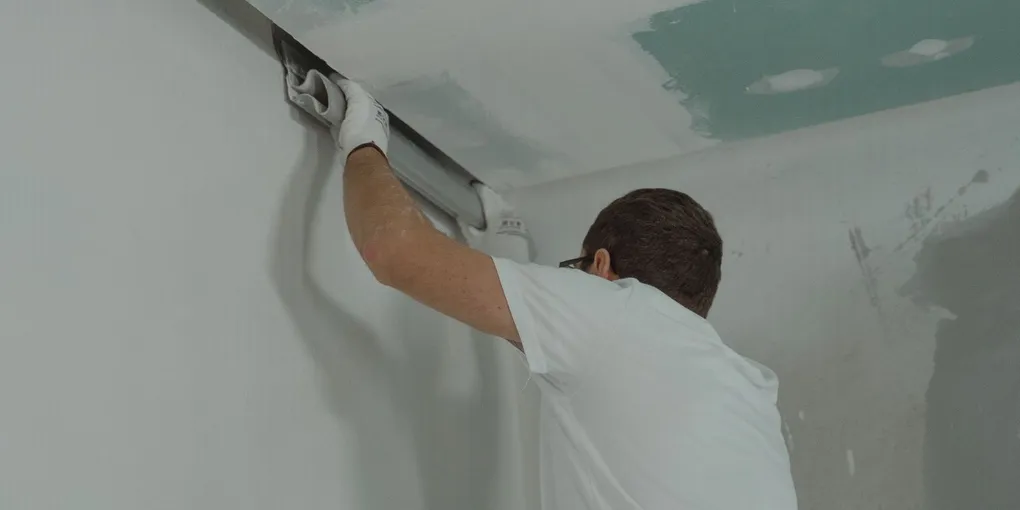
How to Fix a Crack in Drywall (So It Stays Fixed)
Drywall cracks come back if you just paint over them. The right way to fix a crack in drywall so it does not reappear, including the mesh-tape trick contractors use.

Quick answer: To fix a crack in drywall so it stays fixed, lightly widen the crack with a utility knife to a small V-groove, then cover it with self-adhesive fiberglass mesh tape, the step most homeowners skip. Apply two thin coats of joint compound over the tape, sanding smooth between coats, then prime and paint. The tape is what makes the repair last; spackle alone always cracks again. Watch for diagonal or stair-step cracks, those signal foundation issues and warrant an inspector.
Hairline cracks in drywall are normal as a house settles. The problem is that most “fixes”, just spackle and paint, last a few months before the crack reappears in the exact same spot. I patched the same crack above an office door three times before I sat down and thought about it. The first two times I’d done what most people do: slap some lightweight spackle on it, sand, paint. Looked great for about four months. Then crack again. The third time I tried mesh tape and joint compound and got eight months out of it. The fourth time I did it right. Hasn’t come back.
What You’ll Need
- A utility knife
- A 6-inch putty knife (4-inch also works for narrow cracks)
- A vacuum or brush
- Self-adhesive fiberglass mesh drywall tape ($4)
- Joint compound or lightweight spackle
- 120- and 220-grit sandpaper
- A sanding block
- Primer (a small can is enough)
- Matching paint
- A drop cloth
Step 1: Identify What Kind of Crack You’re Dealing With
Not all cracks are equal. Take a look before deciding to fix it.
- Hairline crack, thin, less than 1/16 inch, often along seams or near corners of doors and windows. Normal settling. Fix away.
- Wider straight crack, up to 1/4 inch, along a seam. Common where two pieces of drywall meet. Easy fix.
- Stair-step crack, a crack that follows the joints between bricks or blocks in a stair-step pattern. This usually appears on basement walls, not drywall, but if you see this pattern on a wall, stop. It could indicate foundation movement and warrants an inspector.
- Wide crack with one side higher than the other, same warning. The wall has shifted. Get an inspector before patching.
- Diagonal crack from the corner of a doorway or window, that’s a stress crack, not a finish crack. The drywall is moving with the framing every time the house expands and contracts. The mesh tape method below handles these, but they need the upgraded approach in the “Stress Cracks” section near the end.
- Crack that returns after every patch, common above doors and windows. Almost always the same stress-crack issue. Mesh tape and setting-type compound usually solve it.
For the standard hairline-to-quarter-inch crack along a wall or above a door, continue.
Step 2: Open the Crack Slightly
This sounds counterintuitive, but it’s the move. A crack with sharp, narrow edges doesn’t hold filler, it just shrinks and pulls away.
Use a utility knife to lightly score along the length of the crack at a 45-degree angle on each side. You’re creating a small V-shaped groove that gives the joint compound something to grip. Don’t dig deep, just widen the surface of the crack to about 1/8 inch.
For wider cracks, you can skip this, the groove is already wide enough.
Vacuum or brush out the dust and any loose drywall debris.
Step 3: Apply Mesh Tape (The Step Most People Skip)
This is the difference between a fix that lasts and one that doesn’t. Self-adhesive fiberglass mesh tape spans the crack and holds the joint compound together as the wall continues its tiny seasonal movements.
Steps:
- Cut a strip of mesh tape slightly longer than the crack.
- Press it firmly over the crack, centered.
- Smooth it down with your fingers or the flat side of your putty knife. No bubbles or wrinkles.
Skip this step and your crack will likely come back within a season. Use it and the repair is permanent.
Step 4: First Coat of Joint Compound
- Scoop a small amount of joint compound onto your putty knife.
- Hold the knife at a 45-degree angle and drag it across the mesh tape, pressing the compound through the mesh and into the crack.
- Second pass with the knife held flatter to scrape off excess. You want a thin coat that fully covers the tape, not a thick built-up ridge.
- Feather the edges out 2-3 inches past the tape so there’s no sharp boundary between filled and unfilled wall.
Let it dry. Joint compound takes 4-24 hours depending on thickness, brand, and humidity. Don’t try to recoat over wet compound, it’ll cause cracking.
Step 5: Sand and Recoat
- Once dry, sand the patch lightly with 120-grit on a sanding block. Don’t sand all the way back to the tape, you want a smooth surface, but you also want compound covering the tape.
- Wipe the dust with a damp rag.
- Apply a second, wider coat of joint compound. This one feathers another inch or two beyond the first coat in every direction.
- Let it dry.
- Sand with 120-grit, then finish with 220-grit for a glass-smooth surface.
For perfectionists, a third thin coat may be needed if the patch is still visible. For most homeowners and most cracks, two coats is plenty.
Step 6: Prime and Paint
- Apply a coat of primer over the patched area, slightly past where the joint compound goes. Drywall compound is much more porous than the surrounding paint, without primer, the patch shows through as a dull spot.
- Once primer is dry (1-2 hours), paint over it with your matching wall paint.
- For an invisible repair, paint the wall corner to corner, not just the patch. A spot-repaint always shows the patch boundary, especially in raking light.
A Note on Stress Cracks (the Ones That Keep Coming Back)
The most common nuisance crack is the one above a doorway or window. Diagonal, coming off the upper corner of the frame. These appear because the framing above the opening flexes slightly when the door is slammed or under seasonal humidity changes. The mesh tape method works here, but for the most durable repair on a stress crack:
- Use setting-type compound for the first coat, the powder kind that hardens chemically, not the pre-mix that just dries. It’s harder than air-drying compound.
- Embed mesh tape into the setting compound while it’s still soft. Press it flat.
- Two more coats of regular joint compound on top, feathered wide.
- Use a stain-blocking primer on the patched area specifically so the patch doesn’t flash through the topcoat.
That’s the recipe that actually holds. A truly stubborn stress crack may need the trim or door header readjusted, but that’s rare.
Common Mistakes to Avoid
Skipping the tape. Cannot be overstated. Joint compound alone is brittle. It cannot span a moving crack. The tape is what makes the repair last.
Sanding before it’s fully dry. Wet compound gums up your paper and pulls out of the wall in chunks. Wait the full dry time.
Too much compound in one coat. Thick layers shrink as they dry, creating new cracks in your fresh patch. Two thin coats always look better than one thick one.
Forgetting to prime. Joint compound absorbs paint differently than the surrounding wall, so unprimed patches look slightly darker or matter from any angle with light. Prime first.
Trying to spot-paint a small area. Even with the perfectly matched color from the original can, paint fades, and a fresh patch always looks brighter than the surrounding wall. Paint the whole wall corner to corner.
Frequently Asked Questions
Why does my crack keep coming back? You probably didn’t use tape, or used too-thin compound. Reopen the patch slightly, apply mesh tape, redo with setting-type compound on the first coat. If it still comes back after that, you may have a structural movement issue.
Can I use caulk instead of joint compound? Caulk stays flexible, which sounds good for moving cracks, but you can’t sand caulk smooth and it doesn’t hold paint well. Use it only for the corner where the wall meets the ceiling or trim, not for face cracks.
What’s the difference between joint compound and spackle? Spackle is lightweight, dries fast, great for small holes. Joint compound is heavier, takes longer to dry, but is the right choice for cracks and seams because it shrinks less and holds tape better.
Should I be worried about a crack? Hairline cracks are normal. Worry if: the crack is wide enough to fit a coin into, the crack is diagonal across a wall, one side of the crack sits higher than the other, or the crack runs all the way through to the outside of the house. Those signal foundation movement and warrant an inspector.
How long does the repair last? Done right (with tape, two thin coats, primed and painted), the repair lasts indefinitely, as long as the underlying cause (settling, framing flex) doesn’t get worse. I marked the date in my phone calendar after the fourth-time-right fix on the office door. It hasn’t come back.
My walls have texture and the patched area looks smooth. How do I fix that? Texture matching takes longer than the crack repair itself. Once the patch is sanded and primed, you need to recreate the surrounding texture before painting. For orange peel, thin joint compound to a heavy cream and splatter it on with a brush, then let it set. For knockdown, dab random trowel patches with the flat side and knock the peaks down lightly before it fully dries. Test on a piece of cardboard first to calibrate the spatter or trowel pattern. One thing that matters more than the texture match itself: paint the whole wall corner to corner rather than spot-painting the repair. Fresh paint on an isolated patch always reads slightly different from the surrounding wall in raking light, no matter how close the texture gets.
Fixing a crack in drywall so it stays fixed comes down to one step most people skip: mesh tape over the crack before any compound goes on. Two thin coats of joint compound over the tape, sanding smooth between coats, then prime, then paint. Skip the tape and you’re back here in six months patching the same line.