How to Fix a Squeaky Door in 5 Minutes
A squeaky door has 3 possible causes, and all of them are 5-minute fixes with stuff you already have. The exact method that silences any door, and why WD-40 is the wrong tool.

Quick answer: To fix a squeaky door, identify the noisy hinge (usually the top one), then tap the hinge pin out from below with a pin punch or a nail and hammer. Wipe the pin clean, coat it with white lithium grease or petroleum jelly, drip a few drops inside the hinge barrel, and tap the pin back in. Skip the WD-40, it’s a degreaser that washes lubricant out and makes the squeak worse a few months later. Tighten any loose hinge screws while you’re there.
5:15 a.m. is when our bedroom door used to squeak. I work an early shift; Megan doesn’t. For about three months last winter the door announced my morning every weekday at the same time. The fix took five minutes once I finally remembered on a Friday night. White lithium grease, a pin punch, three hinge pins out and back in. She didn’t hear me leave the next morning. Small wins.
The fix for a squeaky door takes five minutes and almost always costs nothing. Here’s how.
What You’ll Need
- A hammer
- A pin punch, or a nail / screwdriver to tap with
- A rag or paper towel
- One of: white lithium grease, petroleum jelly, silicone spray, 3-in-1 oil, or cooking oil (in a pinch)
- A Phillips screwdriver
- Optional: a new hinge pin ($2 if yours is bent or badly rusted)
Note that WD-40 is not on this list. Despite the reputation, WD-40 is a water displacer and degreaser, not a lubricant. It works briefly, then evaporates and takes your existing grease with it. A few months later the door squeaks worse than before. Use real lubricant the first time.
Step 1: Identify Which Hinge Is Squeaking
Most squeaky doors have one specific hinge causing the noise, usually the top one, because it bears the most weight. Open and close the door slowly while listening close to each hinge. Easier if someone helps and watches.
Sometimes all three hinges squeak. The fix is the same; just do it three times.
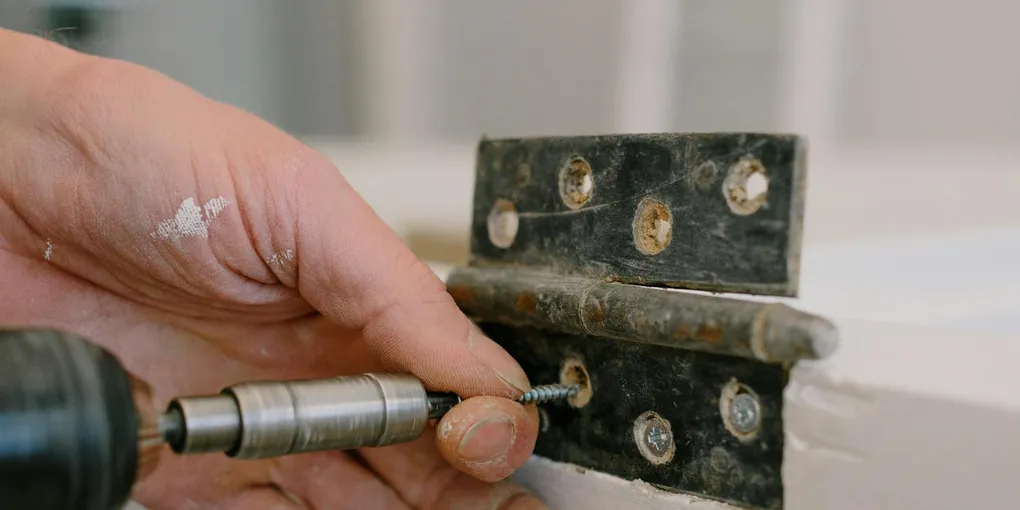
Step 2: Lift the Hinge Pin
Each hinge has a removable pin running through the center. Lifting it out is how you’ll lubricate inside the hinge.
With the door closed (or someone holding it):
- Place the tip of a pin punch (or nail or screwdriver) against the bottom of the hinge pin.
- Tap upward with the hammer. The pin slowly walks up out of the hinge.
- Once the head clears the top of the hinge, grab it with pliers or by hand and pull straight up.
If the pin won’t budge:
- Spray a little penetrating oil at the top and bottom and wait 10 minutes.
- Tap from below with more force, the pin is steel, it’s tougher than your hammer.
- If it’s seriously rusted, a proper punch tool gives you more force without bending anything.
Step 3: Inspect the Pin
Lay the pin on a paper towel and look at it.
- Black or dark gunk on the pin, old, dried-out lubricant. This is normal and what’s causing the squeak.
- Rust on the pin, moisture has gotten in. You can clean it or replace the pin ($2 at any hardware store).
- Visible wear or a bent pin, replace it.
Wipe the pin clean with a rag. A little degreaser if it’s really gunked up.
Step 4: Lubricate
This is the key step. Apply lubricant to:
- The pin itself, thin coat of grease, petroleum jelly, or silicone spray.
- Inside the hinge barrel, a few drops of oil down inside (or silicone spray). With the pin out, you have clear access.
What to use:
- White lithium grease (best), comes in a small tube ($4). Stays put, doesn’t run, lasts years. The one I keep in the garage.
- Petroleum jelly (Vaseline), works fine. Probably already in the house.
- Silicone spray, sprays into the hinge barrel from outside if you don’t want to remove the pin.
- 3-in-1 oil, works but runs and may drip.
- Cooking oil (olive, vegetable), works in a pinch but eventually goes rancid and attracts dust.
Avoid: WD-40 (washes out other lubricants), motor oil (too thin, makes a mess).
Step 5: Reassemble
- Slide the lubricated pin back into the hinge from the top.
- Tap it down with the hammer until the pin head sits flush with the hinge.
- Wipe any excess grease off the door and frame.
- Open and close the door a few times.
Silent. That’s it.
What If It Still Squeaks?
If the squeak persists after lubricating, the cause is something other than the hinge.
Loose hinge screws
Over time, the screws holding the hinge to the door frame work loose, especially on heavy doors or in older homes. A door that has shifted slightly often squeaks against the frame, not at the hinge.
- Tighten all six screws on each hinge (three in the door, three in the frame).
- If a screw won’t tighten (the hole is stripped):
- Pull the screw out
- Stuff the hole with wooden golf tees or matchsticks coated in wood glue
- Let dry, then drive the screw back in
Door rubbing against the frame
If the door drags along the frame as it opens, the rubbing sound can mimic a squeak. Open the door slowly and watch where it’s making contact. Sand or plane the high spot, or shim under a hinge leaf.
The latch or strike plate
A worn strike plate (the metal piece on the door frame) can squeak as the latch slides over it. A little lubricant on the strike plate face and the latch tongue.
Common Mistakes to Avoid
Using WD-40. It works for one week, then it doesn’t. Use real lubricant the first time.
Not removing the pin. Spraying lubricant on the outside of the hinge gets some into the barrel but not enough. The pin itself needs to be coated.
Over-lubricating. A thin film is enough. Globs of grease attract dust and drip onto the floor.
Ignoring the hinge screws. A squeaky door is often two problems: dry hinge plus loose screws. Fix both while you’re there.
Forgetting the bottom hinge. People often assume only the noisy hinge needs treatment. If you have the pins out anyway, do all three.
Frequently Asked Questions
How long does the lubrication last? White lithium grease: 2-5 years. Petroleum jelly: about a year. Cooking oil: a few months.
Why does my door squeak only in winter? Cold dries out the lubricant faster, and wood door frames contract slightly, increasing friction. Re-lubricate in fall before heating season starts.
Can I do this without removing the door? Yes, that’s the point of the hinge pin design. The door stays in place. You just lift the pin out, lubricate, put it back.
The hinge pin is bent and won’t pull out. A hinge pin remover tool ($5) or a small pry bar from below usually does it. If it’s truly stuck, you may need to remove the whole hinge.
My new door is squeaking already! New doors sometimes ship with under-lubricated hinges. Same fix.
What if my door squeaks in summer but not winter? If the hinges are well-lubricated but the squeak comes back in humid summer months, the door is rubbing against the frame, not the hinge. Wood absorbs moisture and swells slightly as humidity climbs in July and August. A door that fits fine in dry weather can squeeze against the frame jamb. Find the contact point by rubbing chalk on the door edge, closing the door fully, and then opening it to see where the chalk transferred to the frame. Light sanding on that spot, or a pass with a hand plane if you have one, solves it without touching the hinges. Usually 20 minutes of work. The sticky door fix covers this in more detail if the rubbing is severe enough to affect the latch.
Will bar soap or candle wax work if I don’t have grease? Bar soap rubbed directly on the hinge pin works as a short-term fix. The oils and wax in a standard soap bar create a film that quiets most squeaks right away. Candle wax and crayon wax do the same thing. The catch: soap residue dries out over a few months and can attract grime inside the hinge barrel over time. Fine as a stopgap while you wait on a hardware store trip. For a door you want quiet for the next two to three years, petroleum jelly is the better answer: it’s in most medicine cabinets, stays put longer than soap, and coats the pin as cleanly as anything else on the list. White lithium grease in a small tube costs $4-5 and lasts five years or more, which is what most people settle on after the first round.
A squeaky door is one of the easiest home problems to fix permanently. Five minutes, a $4 tube of grease, and that sound is gone. While you’re there, tighten the hinge screws, those work loose over time, and a tight door is a quiet door. I told one of the guys at work about this fix and he said he’d had a squeaky door for six years. Six years. Five minutes a hinge, and never again.